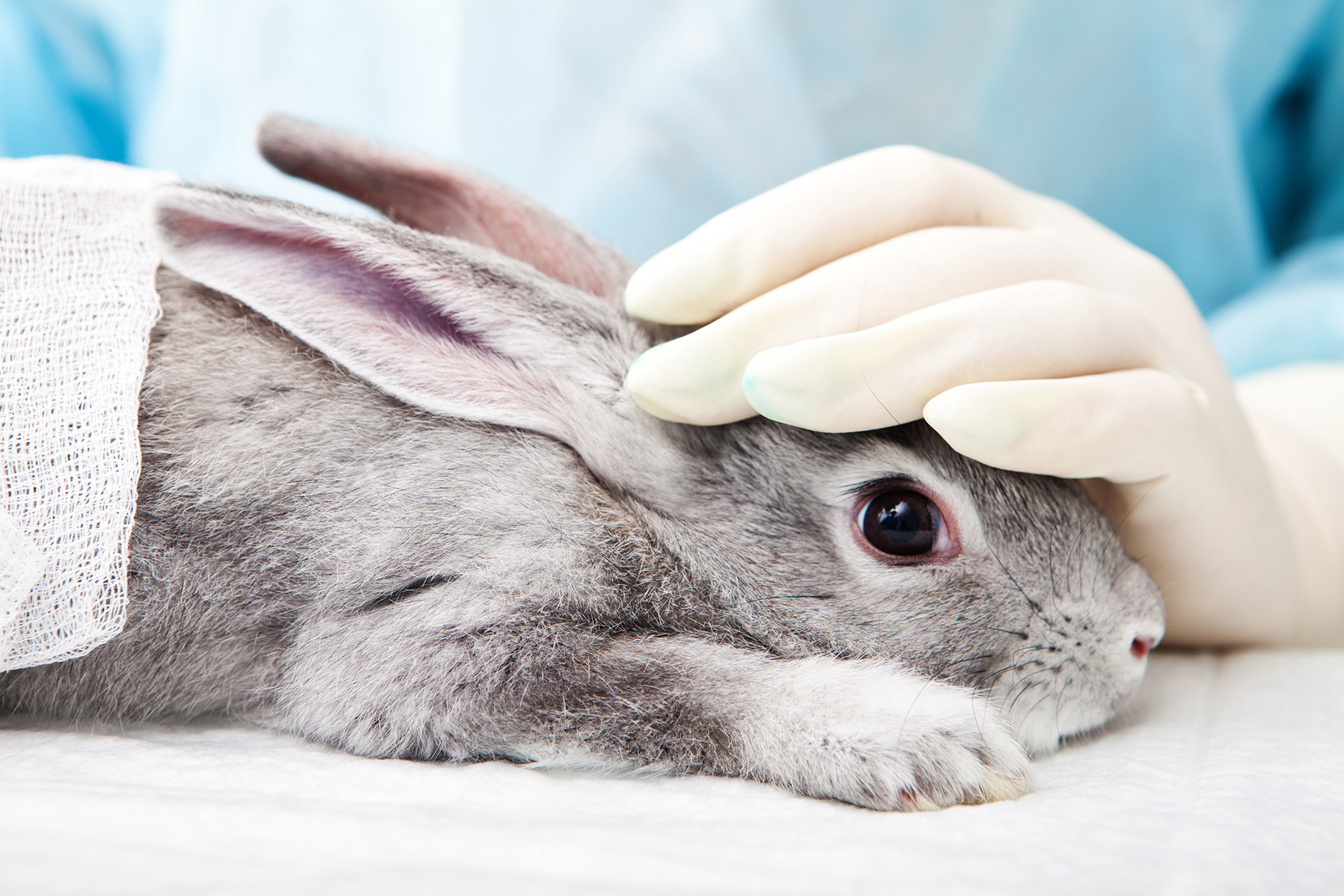
On average around 300,000 animals per year are used in experimentation, testing and teaching in New Zealand - from cats and dogs to rabbits, deer, mice, rats, fish, birds, pigs, cows and guinea pigs. In 2009 a total of 297,111 live animals were experimented on. 55% were killed, or died as a result of the experiment. In 2010 242,149 animals were used.
While some research is non invasive, many experiments in this country involve extreme cruelty. The National Animal Ethics Advisory Committee (NAEAC) asks companies to grade their tests as causing ‘little or no impact' up to ‘very high impact' (previously referred to as ‘very severe suffering').
Animals in the top category will have undergone procedures that cause extreme pain - both mental and physical. Tests may involve conducting major surgeries without the use of anaesthesia, experiments causing them to die from poisoning, severe restrictions on water or food intake, purposeful exposure of conscious animals to lethal extremes of cold, cutting of motor nerves and studies of the effects of chemicals which cause a protracted death with marked distress. If someone did the same to their companion animal dog or cat they would be prosecuted.
Several years ago SAFE director Hans Kriek visited a research facility that conducted test on rodents to check the efficacy of vaccines developed for livestock. "I will never forget the sad look on the faces of some of the guinea pigs that had been given lethal drug doses and were slowly dying," says Hans. " Alternative testing methods had been developed even then but despite that animal testing continued. I am outraged that nothing seems to have changed." Beagle experiments New Zealanders have been horrified by the news reports of beagles being given away from a testing facility. (December 2011). Over 800 dogs were experimented on in this country, according to 2009 figures, and beagles are the preferred breed because of their gentle qualities.
SAFE led a campaign against the facility in question, Valley Animal Research Centre (VARC), which provided animals for research, and also conducted invasive experiments on the premises. It has since closed down. You can find out more about the Ban Beagle Experiments campaign and catch the latest updates. Agribusiness animal testingContrary to what many may believe, much animal research in New Zealand is aimed at increasing the profits of animal agricultural industries. Every year agricultural chemicals, vaccines and other veterinary products are tested on animals, done to increase economic yields rather than to benefit the welfare of animals. Farm animals are experimented on to make them grow faster, have more babies, use their food more efficiently, or to change the quality of their milk.
SAFE has consistently spoken out against cruel genetic modification and cloning experiments.
Cosmetic testing Globally, crude and painful experiments continue to be carried out on thousands of animals to test new cosmetics and household products or their ingredients. Many of these products are for sale in New Zealand. Download the new SAFE Shopper guide to help you avoid products tested on animals. Animal testing Animal experimentation (vivisection), causes suffering to millions of animals. Estimates put the figure at over 115 million animals experimented on worldwide. Animal-based experiments are cruel and exploitative. Animals are deprived of everything natural to them - they can't explore, run, scavenge, hunt, or choose a mate. As they are kept in small cramped cages, their behaviour is severely restricted, causing psychological problems - this is on top of the painful, terrifying experimentation they may endure. | | TAKE ACTION
THE SAFE SHOPPER Support Cruelty Free! You can download SAFE's Shopper Guide to products not tested on animals. SHOCKING ANIMAL TESTS EXPOSED! Follow the ongoing Campbell Live story on beagles from a closed down testing facility Have your say and add your comments.
STAY INFORMED How can this happen in New Zealand? The Animal Welfare Act will be reviewed in 2012. Sign up to the SAFE bulletin and be alerted to updates for when public submissions are due. 
LATEST NEWS CAMPBELL LIVE Locals outraged over animal disposal CAMPBELL LIVE More disturbing stories emerge from beagle research lab CAMPBELL LIVE Animal ethics expert responds to dog research TV3 NEWS Lab-test beagles arriving ill after TradeMe sale CAMPBELL LIVE NZ's lab test beagles looking for homes STUFF The moment lab dogs first tasted freedom
Non-animal MethodsThere are more advanced methods of testing and experimentation that can help humans, develop new products, and avoid harming and killing animals.
There are a huge range of more effective non-animal research techniques available such as cell, tissue and organ cultures, molecular research, computer simulations and population studies. These methods are not only more humane but can be cheaper and quicker too! Click here to find out more. Bad scienceNot only is harming animals for experimentation cruel, there are also important scientific problems that cannot be ignored.
Animal experiments for medicine too often result in findings that are flawed or misleading when applied to human diseases, treatments or procedures, producing inaccurate results because different species react differently to one another when experimented on.
Results produced from animal tests can differ depending upon variables such as the species, age, sex and condition of animals. Drugs that may prove effective in animals can be lethal to humans and vice versa. For example more than 150 stroke treatments have worked in animal testing but failed in subsequent human trials. |